
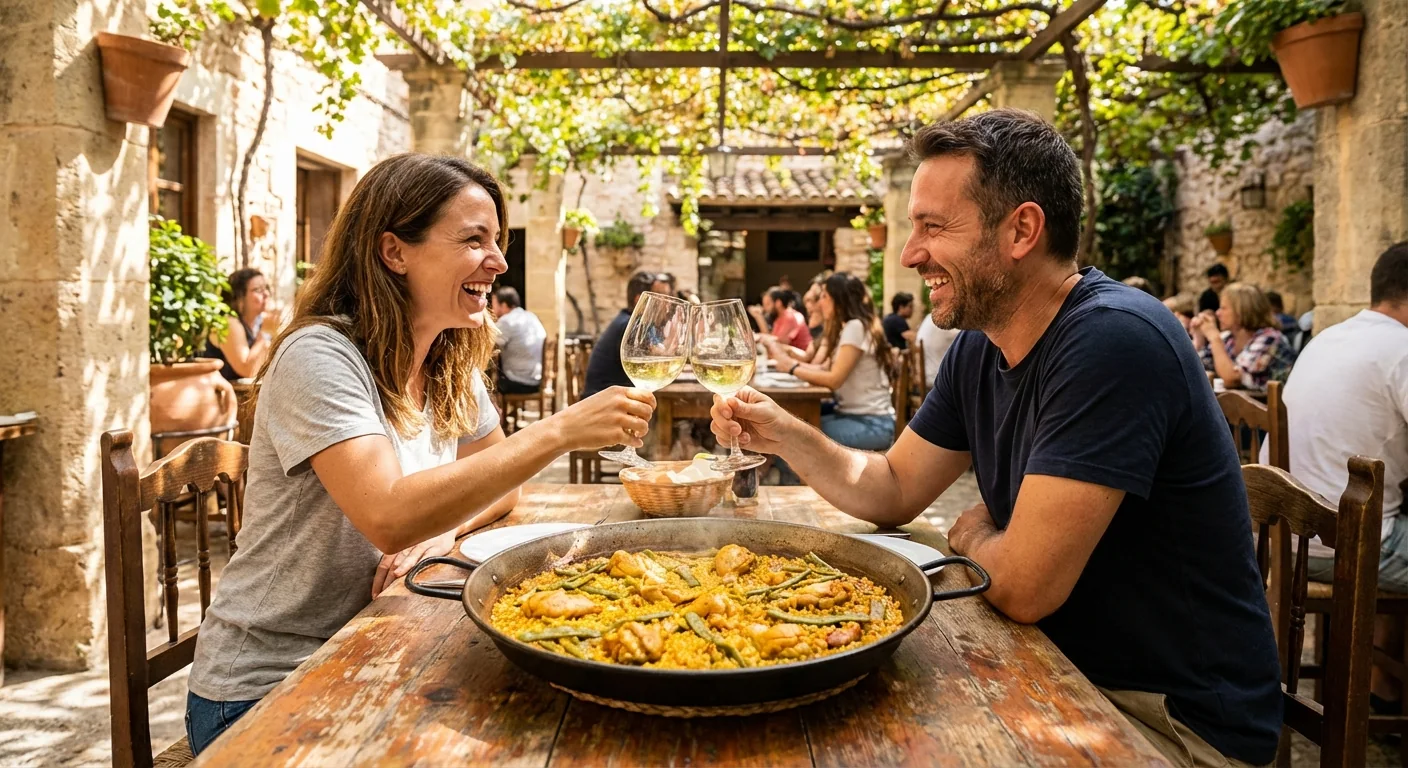
Fangen wir hier an: die echten Regeln der valencianischen Küche
Valencianer nehmen Essen ernst. Nicht auf snobistische Weise, sondern so, wie Menschen es tun, die dasselbe Gericht seit Generationen kochen und genau wissen, wann es falsch ist. Es gibt ungeschriebene Regeln, und sie zu kennen macht den Unterschied zwischen einem guten und einem vergessenen Essen.
Regel eins: Paella ist ein Mittagsgericht. Man isst sie zur Mittagszeit. Sie abends zu bestellen ist technisch möglich, aber die Lokale, die sie um 21:00 Uhr servieren, sind meist die Touristenadressen mit Fotos auf der Karte.
Regel zwei: In der traditionellen valencianischen Paella sind weder Chorizo noch Meeresfrüchte oder Erbsen. Drin sind Huhn, Kaninchen, grüne Bohnen (Bajoqueta), Garrofó (eine große weiße Bohne), Tomate, Rosmarin und Safran. Wenn auf der Karte „Paella Valenciana“ steht und Sie Chorizo sehen, ist es keine.
Regel drei: Horchata ist saisonal. Die echte wird aus Erdmandeln gemacht und eiskalt serviert. Sie ist eine valencianische Sache, keine spanische. Trinken Sie sie im Sommer. Meiden Sie die Pulverversionen, die es in den meisten Cafés außerhalb der Provinz gibt.
Wo man Paella richtig isst
El Palmar, rund 20 Kilometer südlich von Valencia, ist die unbestrittene Heimat der ursprünglichen valencianischen Paella. Im Dorf reihen sich Dutzende Restaurants, die alle dasselbe Gericht über Holzfeuer kochen. Die Qualität schwankt, fällt aber selten unter gut. Das Sonntagsessen hier ist lokale Tradition.
Wenn Sie nicht nach Süden fahren wollen, sind die Strandrestaurants an der Malvarrosa die nächstbeste Wahl. La Pepica (seit 1898) ist das berühmte. Die Paella ist gut, die Terrasse großartig, und Sie teilen sie mit vielen anderen Touristen. Am Wochenende vorab reservieren.
Ruhiger wird es in den Seitenstraßen hinter dem Cabanyal, wo kleine Familienrestaurants Paella für zwei ohne Gedränge machen. Fragen Sie uns bei der Ankunft – wir wissen, welche sich in dieser Saison lohnen.
Mercat Central: gehen Sie früh
Die Markthalle gilt weithin als der beste Lebensmittelmarkt Spaniens. 1928 erbaut, umfasst sie 8.000 Quadratmeter und über 400 Stände. Die Produktqualität ist wirklich gut. Der Fisch ist lokal und frisch. Allein die Wurstabteilung braucht 20 Minuten, wenn man sie ordentlich abgeht.
Gehen Sie zwischen 08:30 und 10:00 Uhr. Danach kommen die Reisegruppen und die Stimmung ändert sich. Montags bis samstags schließt die Halle um 14:30 Uhr. Sonntags ist zu.
Wenn Sie in einer unserer Wohnungen übernachten, haben Sie eine komplette Küche. Der Markt ist etwa 20 Minuten mit der Metro entfernt. Dort einzukaufen und an einem Dienstagabend zu kochen gehört zu den Dingen, an die man sich später erinnert.
Frühstück auf lokale Art
Valencianer frühstücken in einer Bar. Nicht in einem Café, in einer Bar. Der Unterschied zählt: Eine Bar öffnet früh, hat eine Kaffeemaschine, die vor 09:00 Uhr ernsthaft arbeitet, und verkauft eine Tostada con tomate (geröstetes Brot mit Tomate und Olivenöl) für unter 2 €. Ein Café öffnet meist spät, serviert Brunch und verlangt 7 € für dasselbe – mit einer Avocado, nach der niemand gefragt hat.
Horchata mit Fartons zum Frühstück ist die rein valencianische Variante. Fartons sind lange, süße Gebäckstangen zum Eintunken. Die Kombination klingt seltsam, bis man sie probiert. Die Horchatería Santa Catalina in der Altstadt ist die Adresse für die Referenzversion.
In der Nähe unseres Hauses gibt es ein paar gute Viertelbars, in denen Kaffee und Toast unter 3 € kosten. Fragen Sie uns beim Check-in, dann nennen wir Ihnen unseren aktuellen Favoriten.
Menu del día: das beste Preis-Leistungs-Essen Spaniens
An jedem Werktag zur Mittagszeit bietet fast jedes Restaurant in Valencia das Menu del día an. Für 12 € bis 15 € bekommen Sie drei Gänge: eine Vorspeise (Salat, Suppe, Pasta oder Hülsenfrüchte), einen Hauptgang (Fleisch oder Fisch), Dessert, Brot sowie Wasser oder Wein.
So essen die Einheimischen mittags. Nicht als Touristenoption, sondern als tägliche Routine. Die Qualität ist fast immer gut, weil der Ruf des Lokals daran hängt. Ein schlechtes Menu del día verliert Stammgäste schnell.
Wählen Sie Lokale, die das Menü nicht laminiert in sechs Sprachen aushängen. Das sind meist die touristischen. Achten Sie auf handgeschriebene Tafeln oder einen Kellner, der es Ihnen auswendig vorträgt.
Tapas im Viertel Ruzafa
Ruzafa ist derzeit das kulinarisch interessanteste Viertel Valencias. Von der Linie 10 sind es etwa 10 Minuten mit der Metro, und für einen Abend lohnt sich die Fahrt.
In den Straßen um die Calle de Sueca und die Calle de Dénia drängen sich kleine Tapas-Bars, Naturweinläden und Adressen mit moderner spanischer Küche, die sich nicht zu ernst nimmt. Die Preise sind vernünftig. In den meisten Lokalen kommt man bis 20:00 Uhr ohne Reservierung unter, danach sollten Sie einen Tisch haben.
Ruzafa hat außerdem einen der besseren Sonntagsmärkte (Mercat de Russafa) mit lokalen Erzeugern, Brot, Käse und Saisongemüse. Eine gute Alternative zum Mercat Central, wenn Sie am Wochenende da sind.
Getränke: was Sie bestellen
Agua de Valencia ist der lokale Cocktail: Cava, Orangensaft, Wodka und Gin. Er ist süß, er ist kalt, und er trinkt sich an einem Sommernachmittag auf der Terrasse gefährlich leicht. Die Touristenbars in der Altstadt servieren ihn in Krügen. Die Viertelbars machen ihn im richtigen Glas, und meist besser.
Lokale Biere, die man kennen sollte: Turia ist das valencianische Regionalbier und passt zu fast allem. Mahou und Estrella Damm gibt es überall. Beim Wein fragen Sie nach etwas aus Utiel-Requena (dem Weinbaugebiet von Valencia, rund 70 Kilometer westlich). Bobal ist dort die Hauptrebsorte. Das lohnt sich zu wissen.
Was man meiden sollte
Jedes Restaurant mit Essensfotos auf laminierten Karten in der Nähe der Kathedrale. Paella in Einzelportionen für 18 € pro Stück. Horchata aus dem Pulverautomaten. Alles, was auf einem Schild gleichzeitig auf Englisch, Französisch und Deutsch als „authentisch valencianisch“ angepriesen wird.
Nichts davon heißt, dass man in der Nähe der Touristenzonen nicht gut essen kann. Man kann. Aber man muss über die erste Reihe von Lokalen hinausschauen und eine Bar finden, in der die Gäste auf Spanisch bestellen.
Kochen in Ihrer Wohnung
Unsere Wohnungen haben komplette Küchen: Kochfeld, Backofen, Kühlschrank und alles, was man zum richtigen Kochen braucht. Wir haben Gäste, die montags im Mercat Central einkaufen und die meisten Mahlzeiten selbst zubereiten. Bei einer Woche zu zweit spart dieser Ansatz leicht 300 €.
Der Mercadona-Supermarkt (etwa 10 Gehminuten) taugt für Grundnahrungsmittel. Für frisches Obst, Gemüse und Fisch öffnet der Markt beim Cabanyal von Dienstag bis Samstagvormittag.
Wenn Sie Außenraum fürs Frühstück vor dem Marktbesuch wollen: Das Studio mit Patio hat einen eigenen Whirlpool. Wenn Sie zu viert die Kosten teilen, hat die Wohnung mit zwei Schlafzimmern und Terrasse eine komplette Küche und eine Terrasse, die sich für einen Abend zu Hause anbietet.
Wohnen Sie in Valencia?
Unsere Wohnungen liegen 5 Minuten von der Metrolinie 10 entfernt und nah an den lokalen Restaurants an Hafen und Marina. Buchen Sie auf dieser Seite und zahlen Sie den angezeigten Preis.